
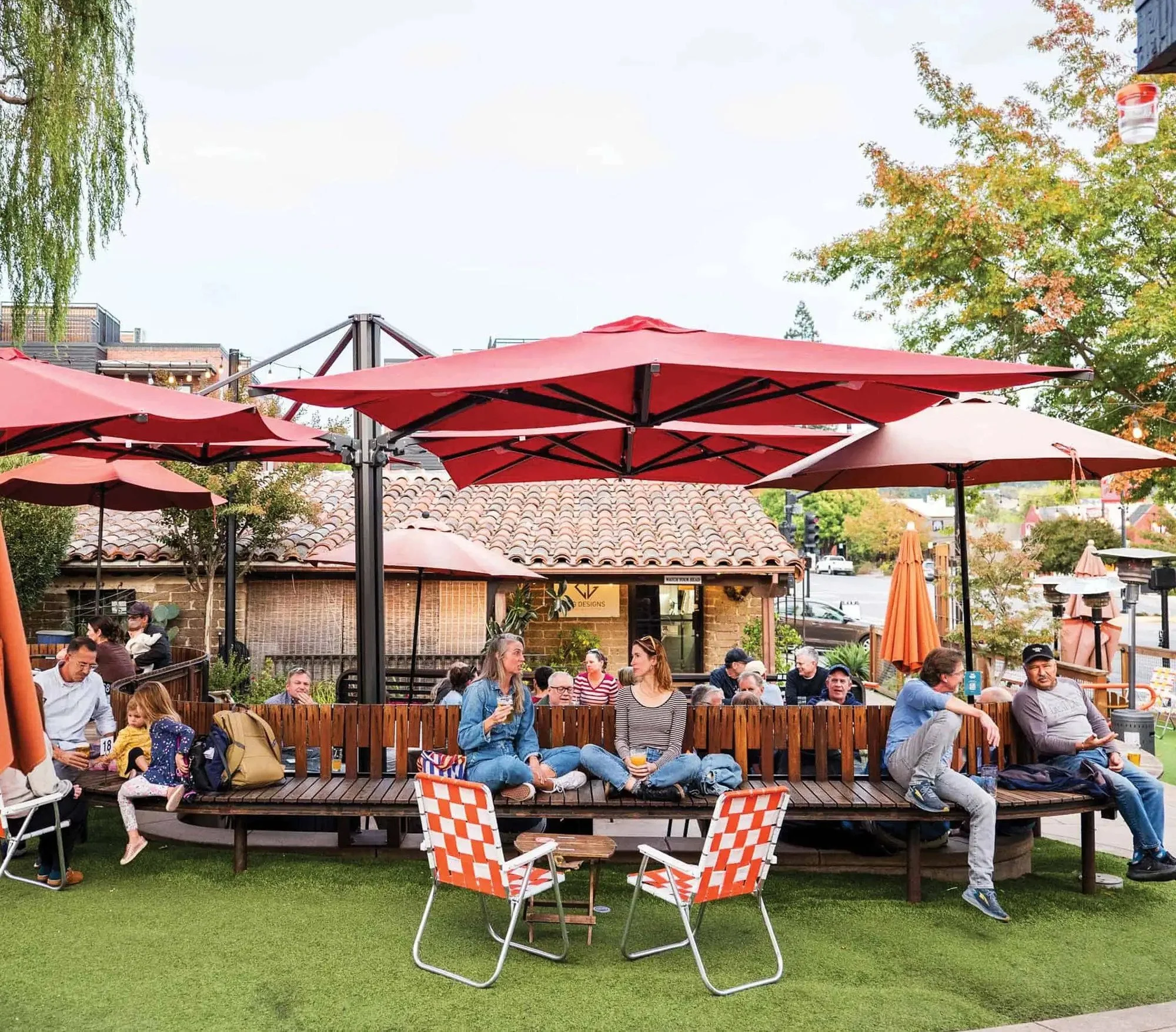
Headlands Brewing in Berkeley, California. Photo: Nat and Cody
Craft beer’s 2010s surge saw breweries settle in many cities’ run-down precincts, bringing manufacturing and nightlife to vacant factories and forlorn storefronts. The boom, in part, rewound the clock to pre-Prohibition times when hulking urban breweries met the beer-drinking needs of the nation’s ascendant cities. But as the pandemic sent city-dwellers seeking square footage to rural and suburban towns, the math shifted on the cost-benefit of brewing and selling beer in metropolises with expensive leases, pricey utilities, hollowed-out offices, and diminished foot traffic.
Seeking customers and more affordable real estate, breweries are moving to the suburbs and installing equipment in strip malls and former department stores, setting up near housing subdivisions that provide built-in clientele. The economic grass is a little greener in the suburbs. While urban and rural breweries saw production volumes drop 4 and 5 percent, respectively, from 2022 to 2023, according to the Brewers Association, suburban craft breweries stayed flat by bubbling up close to homes.
Last spring, Standardized Brewing opened in Lewis Center, Ohio, a suburb north of Columbus, in the growing Evans Farm development. “It’s the downtown moving out into the suburbs,” says Mark Robinson, a co-founder and the brewer. “Do you really want to drive 30 minutes to drink a couple of beers when you could stay close to home and get to know your neighbors?”
For Imbibe, I take a deep look at the geographic shift of breweries to the suburbs.