
Organic Growth: Why All-Natural Beer Is Making a Comeback | Imbibe Magazine
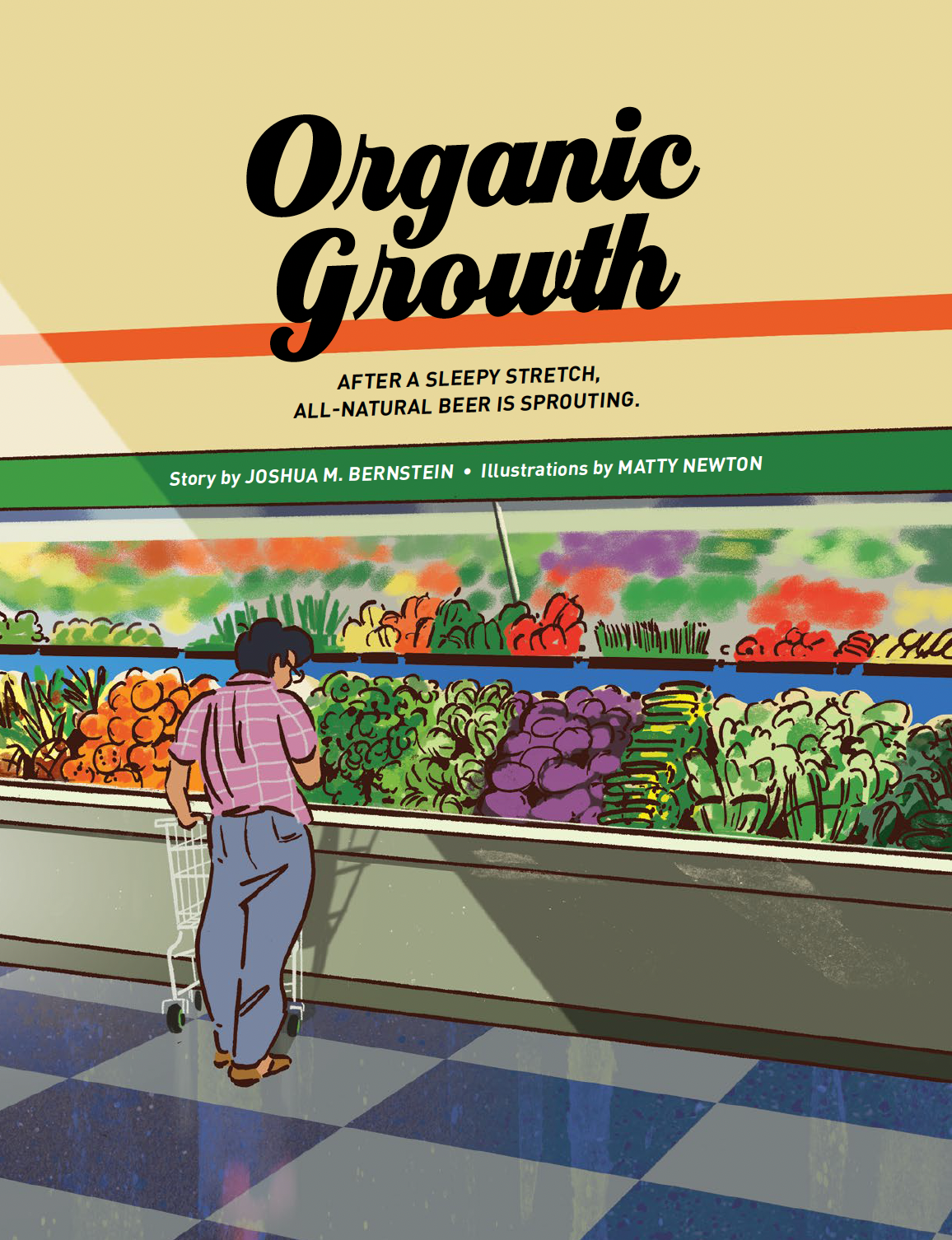
Several decades ago, organic beer felt like a transformational force as Northern California’s Eel River and Vermont’s Wolaver’s Organic Ales, among others, proved that a brewery needed no GMOs to make standout beers. Eager drinkers celebrated them at the North American Organic Beer Festival (NAOBF), launched in 2003 in Portland, Oregon, where founder Craig Nicholls later ran Roots Organic Brewing. I wrote a 2007 Imbibe feature touting how organic beer could “show beer drinkers that you don’t have to sacrifice flavor to save the planet,” according to Steve Parkes, then head brewer at Wolaver's.
But the 2010s saw breweries forego environmental aims in favor of bold flavor, creating stouts inspired by candy bars and hazy IPAs saturated with cutting-edge tropical hops. A fellow organic brewer gave Ron Silberstein, the founder of since-shuttered ThirstyBear Organic Brewery, an unforgettable analogy. “He told me, ‘Everyone else gets to use the Crayola Crayons box with 64 colors, and we’re drawing with a 12-color crayon box,’ ” Silberstein says.
As America’s brewery count climbed toward 10,000, Wolaver’s, Bison Brewing, and other organic breweries closed. The NAOBF ended in 2017. Organic beers such as Lakefront Brewery’s Organic ESB disappeared. Organic growth seemingly dried up.
But as America’s food pyramid rebuilds with red meat and tallow-scented health consciousness permeates contemporary culture, a renewed and wide interest in organic is sprouting. Costco is America’s largest retailer of organic food, and organic product sales reached $71.6 billion in 2024, according to the Organic Trade Association, growing more than 5 percent annually as price gaps shrink between organic and conventional ingredients. At grain supplier Admiral Maltings, which Silberstein co-founded in Alameda, California, in 2017, state-grown organic malt only costs 10 percent more than conventional grain. Admiral’s organic wheat and malt now fuel organic brewing’s next generation, including Protector Brewery in San Diego and Rancho West Beer of Malibu, California, and organic malt was 33 percent of Admiral Maltings' total sales in 2025. “The organic bump is real,” Silberstein says.
For Imbibe, I took a deep dive into the challenges and resurgent fortunes of organic beer, interviewing the teams at Big Country, Hopworks, Patagonia, Fathers Brewing and more.