
Growing Pains: After Craft Beer’s Boom, Hop Farms Are Navigating Decreased Demand | Imbibe
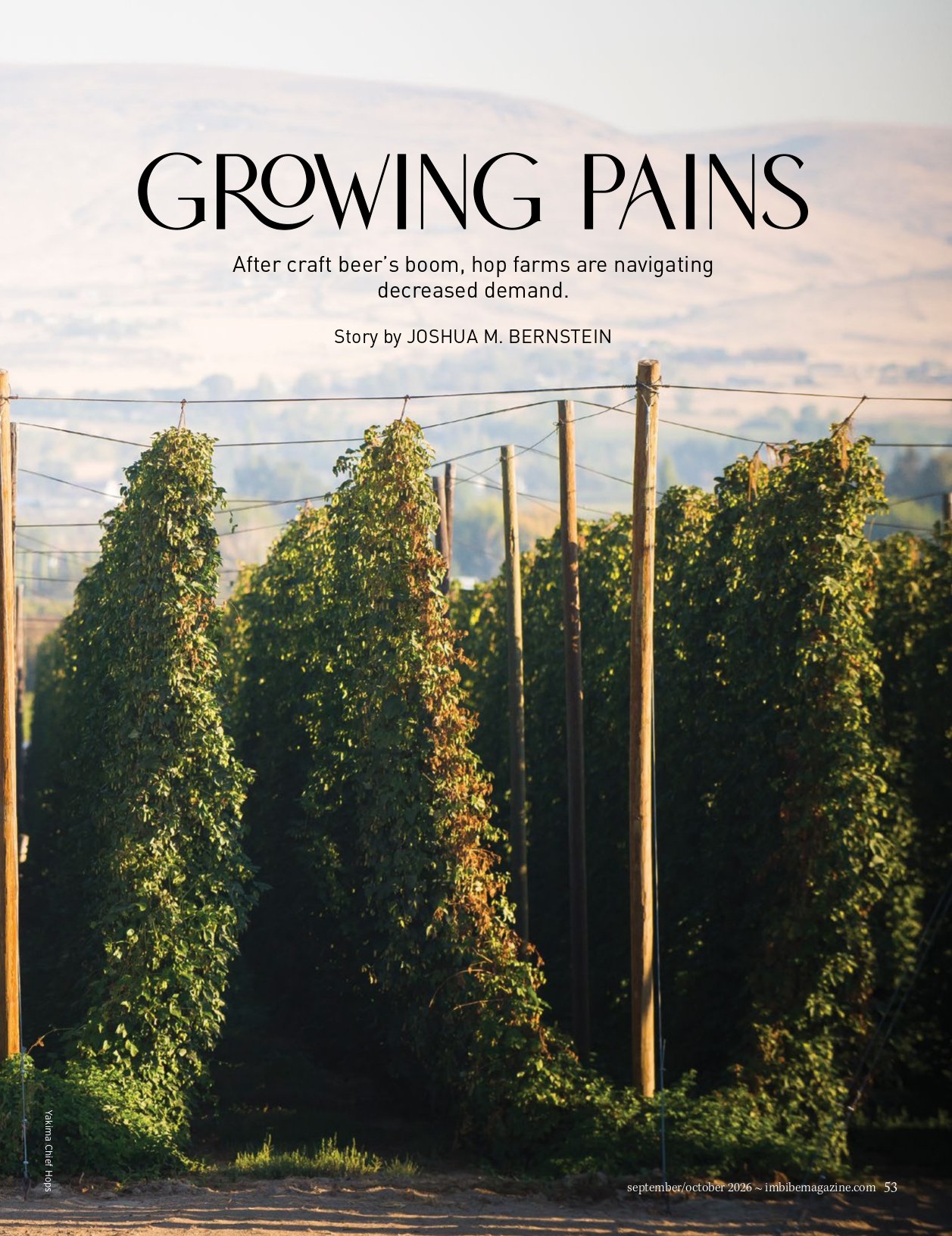
Like the agriculture industry at large, hop farming is filled with booms and busts, battles won and lost with Mother Nature. The go-go 2010s saw hops transform from commodities, mainly used to impart balancing bitterness in beer, into fragrant designer goods. Researchers developed fruity, tropical varietals such as Citra and Mosaic that drove the hazy IPA craze, spiking demand for name-brand hops. “Our industry saw unprecedented explosive growth due to craft beer’s emergence” says Maggie Elliot, the science and communications director for the Washington Hop Commission. “People couldn’t get their hands on enough hops.”
Growers in the Pacific Northwest, hop cultivation’s home, upgraded capacity and specialized equipment purpose-built for a single crop. “Harvesting facilities are only used about five weeks out of the year,” says For the Love of Hops author Stan Hieronymus. New hop farms took root in Michigan, Ohio, New York State, and Maine. Between 2011 and 2021, American hop production doubled from 29,787 acres to a historic high of 60,872 acres. Too bad craft beer production peaked in 2019. “What that meant for the hop industry is that there were more acres in the ground than were needed,” says Bryan Pierce, chief customer strategy officer for Yakima Chief Hops, a grower-owned group of Pacific Northwest hop farms.
Starting in 2023, farmers began substantially cutting back acreage, with just 41,654 acres harvested last year. Nearly one-third of hop acreage evaporated as farms shuttered, notably Michigan’s Hop Head Farms and Washington’s sixth-generation Brulotte Farms. Other farmers removed trellises—support for hop bines that can climb 30 feet—and let fields lay fallow. Two harvests ago, in 2024, I visited central Washington’s Yakima Valley, which cultivates three-quarters of America’s hops due to its dry climate and irrigation infrastructure, and saw barren acres growing weeds and dust.
Hop growers can no longer count on endless new breweries cropping up, demand eternally growing. To economically navigate this uncertain moment, hop farmers are turning their fields into scenic seasonal beer gardens or producing hop-water brands. Other farms are doubling down on developing proprietary varieties—hey, you can only buy this variety from us—or diversifying into other crops to maximize land use and keep trusted staff employed. Buckle up and enjoy the bumpy ride.
For Imbibe, I dug deep into the hop industry.